

Greer, SC · Services
Sports performance training in Greer.
Strength and injury prevention built around your sport, found by a movement evaluation that catches the asymmetry before the season does.
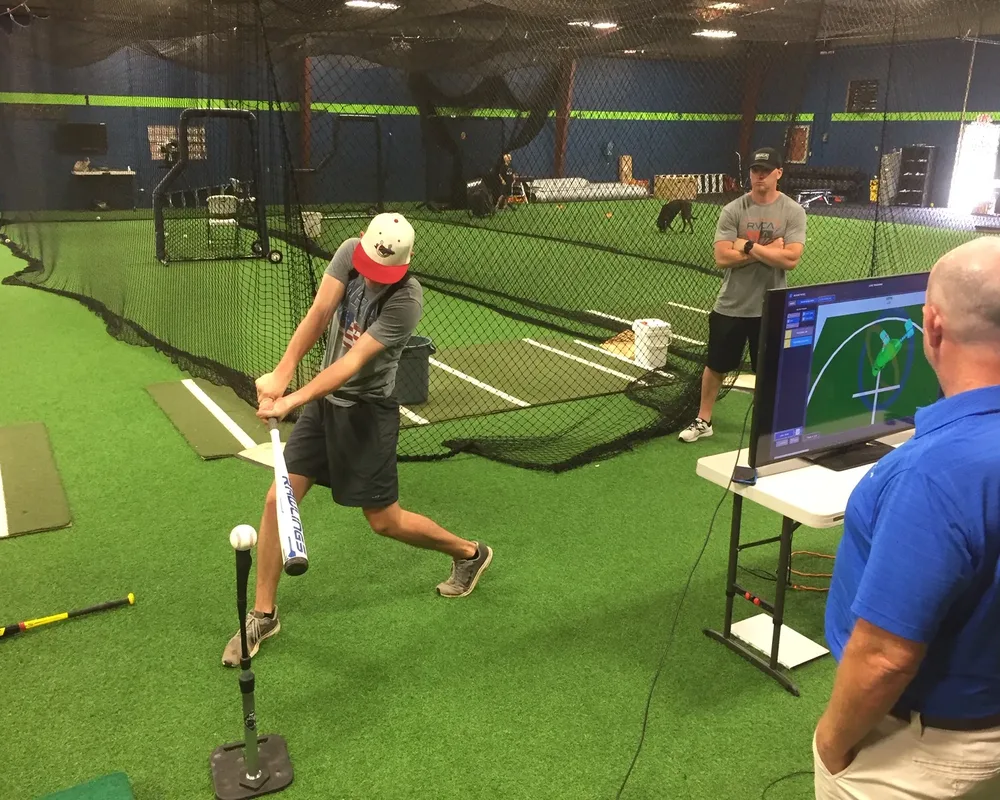
What is sports performance training in Greer?
Sports performance training starts with a cause-first evaluation of how you actually move: strength, mobility, and the asymmetries specific to your sport, throwing mechanics, landing patterns, single-leg strength, that a generic gym program doesn’t screen for. The goal is a plan built around your sport and your training age, not a one-size template.
From there, every visit is one-on-one with a Doctor of Physical Therapy, hands-on where it’s needed, for the full hour. Care moves through four named phases, Pain, Prime, Perform, and Prevent, in that order: managing anything nagging, closing the mobility or strength gaps the screen found, building the specific power your sport asks for, and reducing your injury risk heading into competition.
And the plan has a named endpoint, usually tied to your season or competition date, set at your evaluation and reviewed as your training progresses.
Calm it down.
Hands-on treatment begins at the first visit. You leave understanding what’s actually going on, and you feel a difference early.
Restore what’s stuck.
Targeted mobility work for the joints and tissue actually holding you back, dosed to your body, not a printed sheet.
Build strength you trust.
Progressive load against standards you have to clear before moving on. Confidence, here, is a training effect.
Make it stay fixed.
Testing before you’re cleared, then a keep-it-gone program sized to your real week. Then we graduate you.
What does sports performance training address?
Sports performance training tends to get called in around a specific old injury or a risk the evaluation flags before it becomes one. A sample of what it commonly addresses:
Sports injuries ⟶
The ankle you rolled last season that’s never quite trusted a cut to the left since.
02Baseball & throwing injuries ⟶
The shoulder or elbow that aches by the third inning and stays sore into the next day.
03Golfing injuries ⟶
The low back that flares on the back nine, right when your swing starts opening up to compensate.
An asymmetry or old injury left unaddressed rarely stays quiet under load. It tends to surface exactly when the season asks the most of it, which is the worst time to discover it.
What does a sports performance session look like?
The first visit is a full evaluation: a movement screen, strength testing, and a review of the mechanics specific to your sport. You leave with a plan targeted at what the screen actually found, not a generic template pulled off a shelf.
Every visit after builds on the last: a check-in on how training felt, then progressive strength or power work, movement retraining where the screen flagged something, and load monitored against a standard before you advance. Your doctor stays with you the whole hour and tells you what today’s work is building toward.
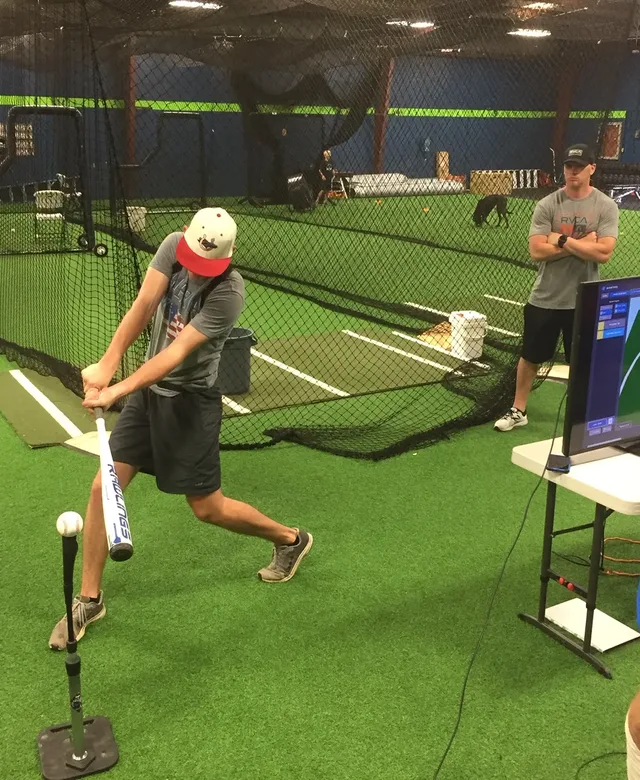
Who this is for, and who it isn’t.
This tends to fit athletes at every level, a middle schooler building a strength foundation, a college athlete returning from an offseason, an adult weekend competitor, who want to move better, get stronger, or reduce a known risk before the season that matters. You don’t need to already be injured to start, and you don’t need a referral.
The athletes who book this are usually the same type: they’ve got a season on the calendar and they want their body ready for it, not a program that treats them like a general population client. If that’s you, this is worth the hour.
It’s not the right first stop for an acute injury that needs imaging or a medical diagnosis before movement testing is safe, or for a medical emergency. In those cases, get evaluated medically first, then come see us for the performance work that follows.
Good fit
- Athletes at any level preparing for a season or competition
- A known asymmetry or old injury risk you want addressed before it flares
- Wanting a plan built around your specific sport, not a general gym program
- No need to already be injured, and no referral required
Not the right first stop
- An acute injury needing imaging or a medical diagnosis first
- A medical emergency
Blood flow restriction ⟶
For building strength at a lighter load while a joint or tendon is still catching up.
02CrossFit rehab ⟶
For the athlete whose sport is the gym itself, and whose training needs the same cause-first eye.
Most competitive athletes end up wanting one of these alongside their performance plan.
“If you have something bothering you that’s impacting what you love to do, or even just your daily life, this is the one body that you get. Zone Physical Therapy has helped me deal with mine.”Grace Alexander · Professional triathlete, triathlon coach
Questions, answered plainly.
It fits a wide range: a middle school athlete building a strength foundation, a college athlete returning from an offseason, and an adult weekend competitor all use the same evaluation and framework. The plan is built around your sport, your training age, and your specific goal, not a single program applied to everyone.
A strength coach builds programs around performance goals. This starts the same way, but adds a Doctor of Physical Therapy’s evaluation of movement, asymmetries, and old injuries still limiting you, so the strength work accounts for what your body can actually handle safely, not just what the program calls for.
Both. A large part of the evaluation is finding the asymmetries and movement patterns that predict future injury, throwing mechanics, landing patterns, single-leg strength gaps, before they cause a problem. If you’re already dealing with something, the same evaluation identifies it and folds the fix into the plan.
No. Most athletes here start healthy and are looking to move better, get stronger, or reduce a known risk before the season that matters. If you are also managing an injury, the plan runs through the same four phases as any other, Pain, Prime, Perform, and Prevent, at whatever pace that requires.
Start with the evaluation that finds what’s actually holding you back.
Put it in writing.
Five short questions. A real person calls you back, usually within two business hours, with times that fit your week.
The people who end up filling this out are rarely in the worst pain of their life. They’re just done working around it, done picking the errand that doesn’t require the stairs. If that’s the stage you’re at, this is the part where you stop researching and start.
Consider it filed.
A real person will call you back, usually within two business hours, with appointment times that fit your week. Keep your phone nearby.
Can’t wait? Call (864) 263-7390 ⟶Easy to find. Easy to park.
In the neighborhood, with parking by the door. Come see the place before you commit, if you like.
The clinic · Zone Physical Therapy
Get Directions ⟶Opens in Google Maps