
Greer, SC · Services
Manual therapy in Greer.
Hands-on care for chronic tightness and pain that’s quietly limiting your active life, diagnostic and specific, performed by a Doctor of Physical Therapy at every visit.
What is manual therapy in Greer?
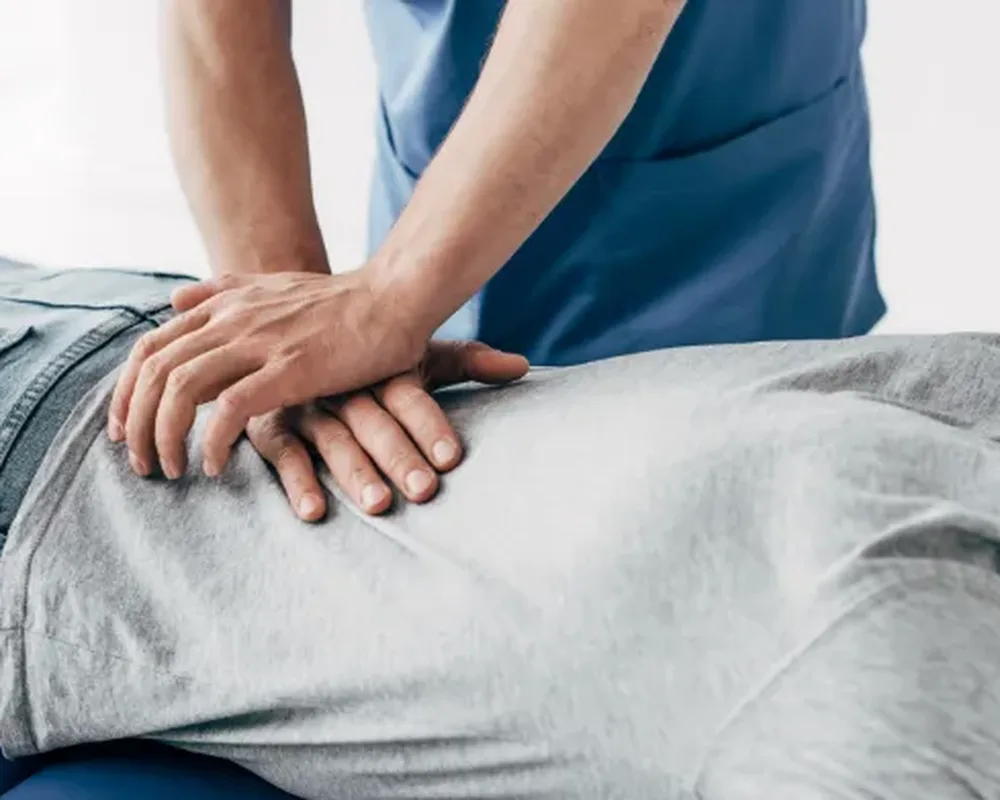
Manual therapy is hands-on treatment, joint mobilization, soft tissue work, and targeted stretching, aimed at a specific finding from your evaluation rather than applied as a general routine. It’s the difference between someone working on your back because that’s where it hurts, and someone working on the exact segment that isn’t moving the way it should.
Chronic muscle tightness rarely shows up alone. It tends to travel with the desk job, the training block, or the years of quietly favoring one side, and it usually doesn’t resolve with stretching alone because stretching can’t reach a joint that’s actually restricted. Manual therapy can.
It’s performed one-on-one with a Doctor of Physical Therapy at nearly every visit, most heavily in the early phases, Pain and Prime, then tapering as your own mobility and strength take over the work it started.
Calm it down.
Hands-on treatment begins at the first visit. You leave understanding what’s actually going on, and you feel a difference early.
Restore what’s stuck.
Targeted mobility work for the joints and tissue actually holding you back, dosed to your body, not a printed sheet.
Build strength you trust.
Progressive load against standards you have to clear before moving on. Confidence, here, is a training effect.
Make it stay fixed.
Testing before you’re cleared, then a keep-it-gone program sized to your real week. Then we graduate you.
What conditions does manual therapy treat?
Manual therapy tends to get called in whenever a joint or muscle has stopped moving the way it should. A sample of what it commonly addresses:
Neck pain ⟶
The stiffness that’s turned checking your blind spot into a full-body maneuver.
02Back pain & sciatica ⟶
The morning stiffness that takes longer to shake off than it used to.
03Chronic pain ⟶
The tightness that’s been there so long it started to feel normal.
A joint that stops moving well doesn’t just sit still and wait. Nearby muscles start guarding it, then compensating for it, until an isolated stiff spot has quietly become a wider pattern.
What does a manual therapy session look like?
Each visit opens with a quick check on how the area has responded since last time, then hands-on work at the specific joint or tissue your evaluation flagged: mobilization to free up a stiff segment, soft tissue work to release a tight muscle, stretching techniques dosed to what you can tolerate that day.
The same visit typically moves into movement or strength work right after, while the tissue is loosest and most receptive, so the gains from the hands-on portion get put to use immediately instead of fading by the time you leave the building.
Who this is for, and who it isn’t.
Manual therapy tends to fit chronic muscle tightness that’s started limiting an active life, stiffness after a desk job or a long training block, and pain that responds well to being worked on but keeps returning without lasting change. It’s also a natural fit for anyone who simply does better with hands-on treatment than with a printed exercise sheet alone.
The patients who get the most from this are usually the same type: they want the actual restriction found and worked, not a general routine run on autopilot. If that describes you, this is the room for it.
It’s not the right first stop for a medical emergency, an acute fracture, or spinal instability that hasn’t yet been cleared for hands-on techniques. That screening happens at your evaluation, before any technique is chosen.
Good fit
- Chronic muscle tightness limiting an active life
- Stiffness after a desk job or a long training block
- Pain that responds to hands-on work but keeps returning
- Someone who does better with treatment than a printed sheet alone
Not the right first stop
- A medical emergency or acute fracture
- Spinal instability not yet cleared for hands-on techniques (screened at evaluation)
Dry Needling ⟶
For the stubborn trigger point that hands-on work alone hasn’t released.
02Myofascial Release ⟶
For the wider fascial tightness that spans more than one muscle at a time.
It’s the hands-on core the rest of the plan builds around.
“Now I am on to riding my bike and workouts in the gym with the program from Zone PT. Thank you very much Dr. Scott!”M. I. · Zone PT patient
Questions, answered plainly.
It covers a range of hands-on techniques: joint mobilization to restore motion at a stiff joint, soft tissue work to release tight or restricted muscle, and specific stretching techniques matched to what your evaluation finds. Your Doctor of Physical Therapy chooses the mix based on your body, not a routine applied to everyone.
No. A massage is generally aimed at relaxation. Manual therapy is diagnostic and specific, performed by a Doctor of Physical Therapy as part of a cause-first evaluation, targeting the exact joint or tissue behind your pain and adjusting technique visit to visit based on how you respond.
It’s built into most visits early in your plan, then tapers as your own mobility and strength take over the work it started. Your evaluation gives you a specific estimate, and the pace tracks your progress rather than a fixed schedule.
Hands-on work loosens tight tissue and restores motion, but it doesn’t build the strength that keeps a joint from tightening back up. Here, manual therapy is always paired with movement and strength work through the later phases, so what we loosen actually stays loose.
Start with the evaluation that finds what’s actually stuck.
Put it in writing.
Five short questions. A real person calls you back, usually within two business hours, with times that fit your week.
The people who end up filling this out are rarely in the worst pain of their life. They’re just done working around it, done picking the errand that doesn’t require the stairs. If that’s the stage you’re at, this is the part where you stop researching and start.
Consider it filed.
A real person will call you back, usually within two business hours, with appointment times that fit your week. Keep your phone nearby.
Can’t wait? Call (864) 263-7390 ⟶Easy to find. Easy to park.
In the neighborhood, with parking by the door. Come see the place before you commit, if you like.
The clinic · Zone Physical Therapy
Get Directions ⟶Opens in Google Maps