

Greer, SC · Services
Metabolic testing in Greer.
Resting metabolic rate and VO2 max testing on a VO2 Master analyzer: real oxygen-and-carbon-dioxide data behind your training zones and your calorie number, not an estimate pulled off a chart or a watch.
What is metabolic testing in Greer?
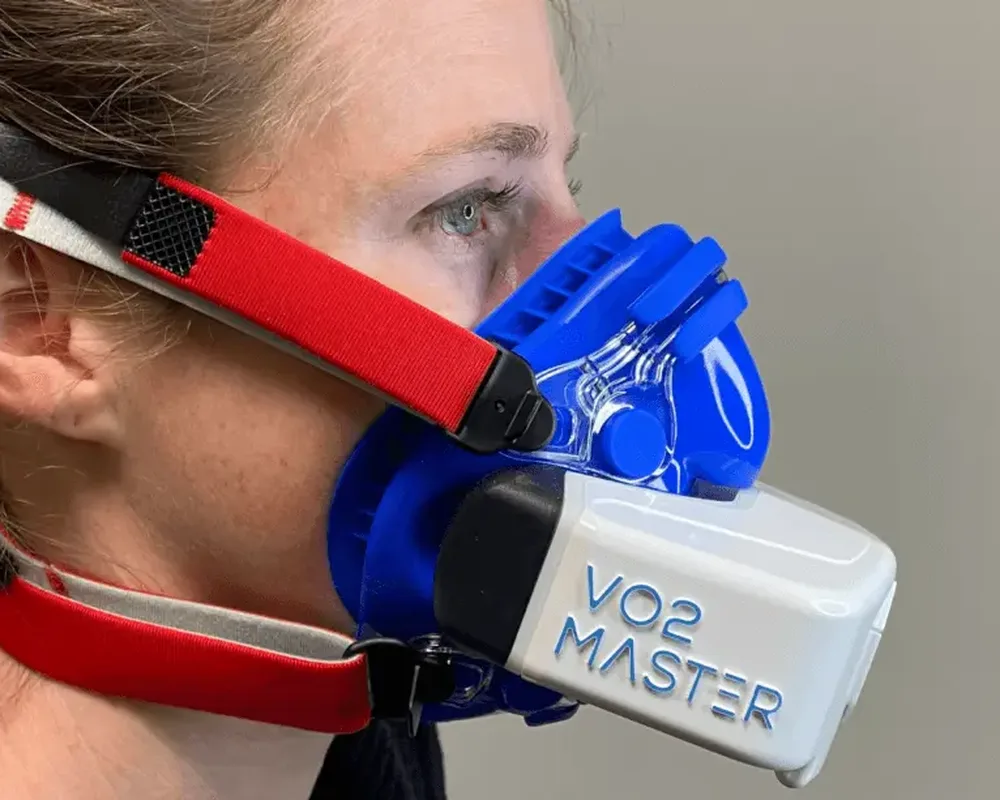
Metabolic testing measures what’s actually happening in your breath, the oxygen you take in and the carbon dioxide you give back, on a VO2 Master analyzer. That gas-exchange data calculates two real numbers: your resting metabolic rate, the calories you burn before you move at all, and your VO2 max, the ceiling of your aerobic engine and the heart-rate zones that sit underneath it. Neither number is estimated from your age, weight, or a formula on a wearable. Both are measured.
Where it lands in a plan depends on why you’re testing. Coming back from an injury or surgery, a baseline test in Pain or Prime gives you an honest starting intensity instead of a guess, so you’re not undertraining out of caution or overdoing it out of impatience. Training for a goal, testing in Perform or Prevent hands you real zones to build the next block around, and a retest later confirms whether the work actually moved the number.
A Doctor of Physical Therapy trained on the VO2 Master system runs the test and walks you through the results the same day, in plain terms, as one measured layer inside whatever plan you’re already running.
Calm it down.
Hands-on treatment begins at the first visit. You leave understanding what’s actually going on, and you feel a difference early.
Restore what’s stuck.
Targeted mobility work for the joints and tissue actually holding you back, dosed to your body, not a printed sheet.
Build strength you trust.
Progressive load against standards you have to clear before moving on. Confidence, here, is a training effect.
Make it stay fixed.
Testing before you’re cleared, then a keep-it-gone program sized to your real week. Then we graduate you.
Who does metabolic testing support?
Metabolic testing isn’t a treatment on its own, it’s the number that makes the rest of your training or rehab honest. A sample of who it commonly supports:
Sports injuries ⟶
The comeback that needs a real starting intensity, not a hunch, before load ramps back up.
02Running injuries ⟶
The training block that overshot fitness, flagged weeks before the pain would have said so.
03Golfing injuries ⟶
The round-ending fatigue that’s more about the engine than the swing.
Most overtraining and undertraining don’t announce themselves. They show up as a plateau, a nagging strain that keeps recurring, or a comeback that stalls, and by the time you notice, weeks of training have gone in the wrong direction. A measured baseline catches that early instead of after the fact.
What does a metabolic testing session look like?
The resting metabolic rate portion comes first: about fifteen quiet minutes lying still, breathing normally into a mask connected to the VO2 Master, while it reads the oxygen and carbon dioxide in each breath and calculates your true resting calorie burn. No treadmill, no effort, just stillness and a mask.
The VO2 max portion is the opposite: a graded walk or run on a treadmill (or a ride, if that fits your training better), with effort stepping up every couple of minutes until you hit your ceiling. The same mask reads the same gas exchange the whole way, and that data plots your exact heart-rate training zones, not an age-based formula. You get your numbers and a plain-language walkthrough before you leave.

Who this is for, and who it isn’t.
Metabolic testing tends to fit two kinds of people equally well: someone training toward a specific goal, a race, a season, a number on the scale, who wants real zones instead of a wearable’s estimate, and someone returning from injury or surgery who wants an honest starting intensity rather than a guess dressed up as caution.
If you’ve already tried trusting the watch and it hasn’t matched how your training actually feels, that mismatch is usually the tell that a measured number would serve you better.
It’s not the right first stop if you have an uncontrolled cardiac or respiratory condition, maximal exertion testing needs your physician’s clearance first in that case, or if you have an active injury that hasn’t been evaluated yet. Start with a physical therapy evaluation, then come back for the number once you know what you’re training around.
Good fit
- Training toward a specific goal and wanting real zones, not a watch’s estimate
- Returning from injury or surgery and wanting an honest starting intensity
- Wanting an accurate resting calorie number for nutrition planning
- Already noticed your training doesn’t match what your wearable tells you
Not the right first stop
- An uncontrolled cardiac or respiratory condition without physician clearance for maximal exertion testing
- An active injury that hasn’t been evaluated yet
Running performance ⟶
Zones from the test, built into an actual mileage and pacing plan.
02Sports performance ⟶
The engine number that shapes how hard a conditioning block should actually push.
The numbers are only useful once they’re built into an actual training plan.
“I went for a VO2 Max test, and later I went for a 3D Gait Analysis and movement evaluation. As a runner, I am very interested in the data and science of running.”Sean Flynn · Zone PT patient
Questions, answered plainly.
RMR testing measures the oxygen and carbon dioxide in your breath at rest to calculate exactly how many calories your body burns before you move a muscle, no formula or guessing involved. VO2 max testing measures the same gas exchange during a graded exercise test, walking or running against rising effort, to find your true aerobic ceiling and the heart-rate zones that actually match it. Both run on the same VO2 Master analyzer, usually in the same visit.
No. Plenty of people book it for an honest calorie number to plan nutrition around, not a watch’s estimate. It’s just as useful for someone returning from injury or surgery who wants a real starting intensity instead of a guess, as it is for someone chasing a personal record.
Skip caffeine and hard exercise for at least twelve hours beforehand, come well hydrated, and avoid a large meal in the two hours prior. Wear clothes and shoes you’d actually train in. If you’re also doing the resting metabolic rate portion, that one works best fasted, so we’ll walk you through timing both in the same visit when you book.
Most people come back every few months, or after a meaningful training or rehab block, rather than on a fixed schedule. The point of retesting is to confirm your zones and calorie targets actually moved with the work you put in, not to assume they did.
Start with a number, not a guess.
Put it in writing.
Five short questions. A real person calls you back, usually within two business hours, with times that fit your week.
The people who end up filling this out are rarely in the worst pain of their life. They’re just done working around it, done picking the errand that doesn’t require the stairs. If that’s the stage you’re at, this is the part where you stop researching and start.
Consider it filed.
A real person will call you back, usually within two business hours, with appointment times that fit your week. Keep your phone nearby.
Can’t wait? Call (864) 263-7390 ⟶Easy to find. Easy to park.
In the neighborhood, with parking by the door. Come see the place before you commit, if you like.
The clinic · Zone Physical Therapy
Get Directions ⟶Opens in Google Maps