

Greer, SC · What we treat
Arthritis in Greer.
A joint that needs longer to warm up every year, or one that’s started dictating which stairs you take: a cause-first evaluation finds how much of that stiffness is the joint itself versus everything around it that’s quietly gone weak, then a plan with an endpoint gets you moving on it again instead of just resting around it.
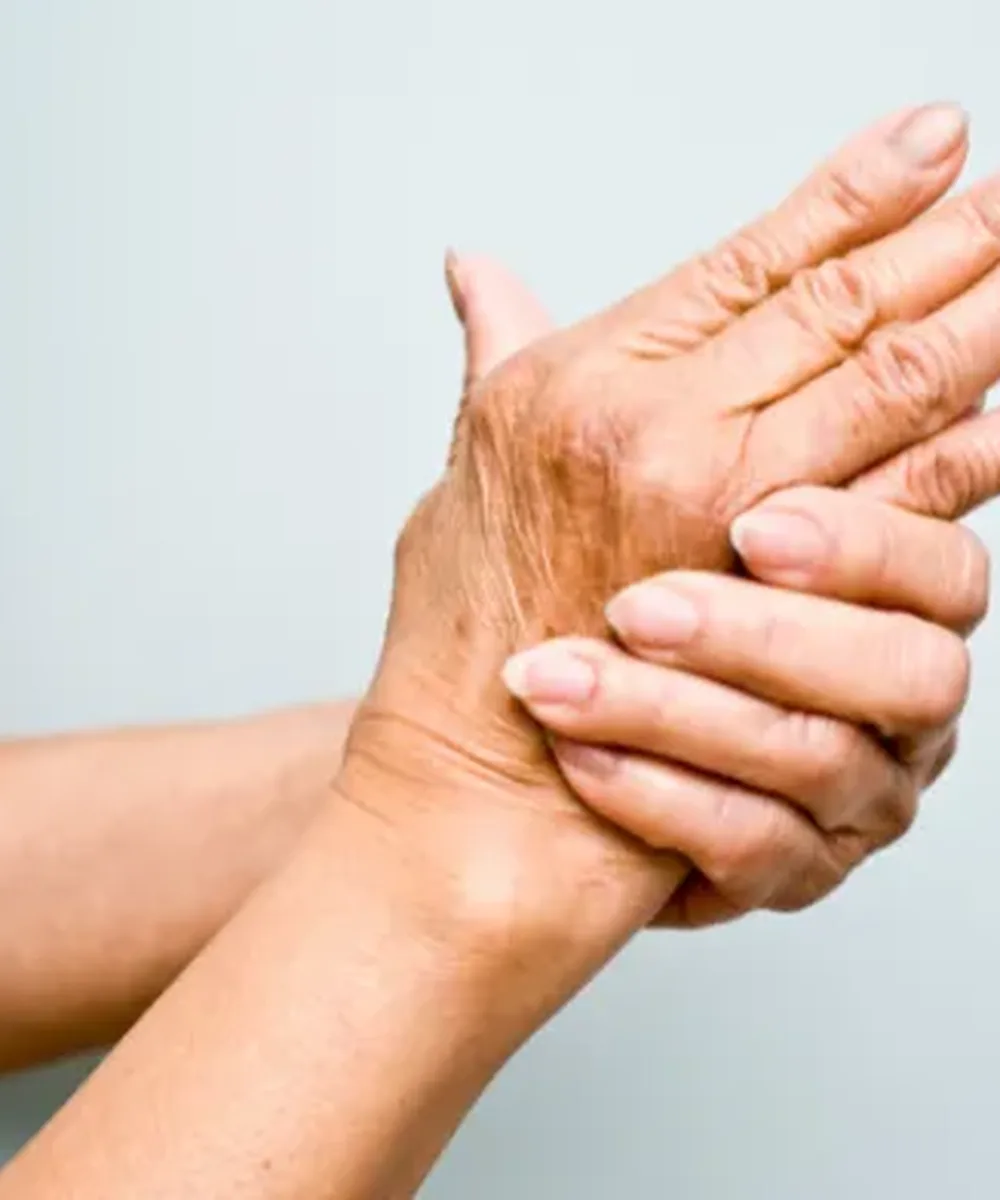
You’ve probably said one of these.
Nobody walks in describing osteoarthritis they haven’t had confirmed. They describe mornings like these. Tap one that sounds like yours.
-
UsuallyMorning joint stiffness from osteoarthritis, cartilage and joint fluid that need movement to loosen up.
See how a load-matched plan shortens that warm-up ⟶ -
OftenQuiet activity avoidance, a joint doing less work so the muscles around it start doing less too.
See how strengthening protects the joint ⟶ -
UsuallyBarometric sensitivity in a joint that’s already irritated, real but rarely the actual driver of the stiffness.
See what’s actually behind the stiffness ⟶
- “I run jars under hot water before I even try to open them.”
- “Getting up from the couch, I plan my route to the armrest before I move.”
- “My wedding ring doesn’t come off some mornings, and I’ve stopped trying.”
If two or three of those sound like your week, you’re not describing something unusual. You’re describing a pattern we see often, and one an evaluation is built to explain.
Why does arthritis happen?
There’s rarely one single cause, which is exactly why guessing doesn’t work. What we usually find, alone or in combination:
- Osteoarthritis (cartilage wear). The cartilage cushioning a joint’s surface thinning over years, changing how load transmits across the joint.
- Loss of surrounding strength. Muscles around an aching joint quietly doing less work, which asks the joint itself to absorb more.
- Reduced overnight joint lubrication. Joint fluid that moves less during sleep, which is why morning stiffness usually eases within twenty or thirty minutes of moving.
- Inflammatory flares. Some joints swell and stay warm for days at a time, a separate pattern from the steady mechanical wear underneath it.
- Compensations from an old injury. A joint favored since a past injury sometimes wears unevenly, and reveals itself later as arthritis.
None of these are diagnoses you make yourself, and most don’t require imaging to start treating. That’s what the evaluation sorts out.
How do we treat arthritis in Greer?
Treatment starts with a cause-first evaluation: testing how the joint moves, how much strength is left around it, and which specific tasks provoke the stiffness, because two arthritic knees rarely need the same plan. From there, care moves through four named phases.
The plan’s endpoint is named at your evaluation, reviewed with you every phase, because the goal is to get you back to your week, not to keep you on the schedule.
Calm the flare.
Manual therapy and load modification to settle swelling and reduce the sharpest stiffness, while identifying which specific movements aggravate the joint.
Restore the range you’ve stopped using.
Gentle mobility work for the joint capsule and surrounding tissue, matched to what that joint can tolerate that week.
Build the strength that protects it.
Progressive strengthening for the muscles supporting the joint, so it carries less of the load on its own.
Make the mornings shorter.
A home program and pacing strategy sized to your daily routine, plus coaching on which loads to modify and which to keep.
What does getting better look like?
People who book an evaluation for arthritis rarely have a single injury to point to. More often, it’s a slower story: a joint that’s asked for a little more warm-up time each year, until stairs, gardening, or a grandchild’s ballgame got quietly planned around. If that’s closer to your version, you’re the typical patient here, not an outlier.
Progress tends to show up in ordinary places first: standing up from a chair without pushing off with your hands, walking the block without slowing at the halfway mark, opening a jar without running it under hot water first. Left untreated, an arthritic joint rarely stays quiet; it tends to narrow what you’re willing to do, and the surrounding muscles keep weakening while you avoid it.
Arthritis doesn’t reverse with rest. A plan that matches load to what the joint can currently handle is what actually changes your week.
Which services treat arthritis?
Physical Therapy
The foundation of treatment: the cause-first evaluation and the four-phase plan that runs the whole recovery.
02Manual Therapy
Hands-on joint mobilization that helps restore range in a stiff capsule faster than exercise alone.
03Laser Therapy
Calms inflammation in a flared joint, often paired with manual therapy in the earliest phase.
04Therapeutic Exercise
Carries Phase III and IV forward, building the surrounding strength that keeps an arthritic joint loaded correctly.
“Christina’s knowledge and expertise got me on the trails again! I highly recommend Zone PT.”Barbara Kaylor · Zone PT patient
Questions, answered plainly.
The things people ask on the phone about their joints, written down.
Physical therapy does not reverse cartilage wear, but it changes how much stress that joint carries day to day. Stronger muscles around an arthritic joint absorb more of the load themselves, and better mobility means the joint does not seize up between uses. Most patients feel a meaningful difference in stiffness and function well before any structural change would show on an X-ray, because the wear was never the whole story.
Rest calms a flare short term but tends to backfire past a few days: the muscles around the joint weaken, the range of motion tightens further, and the joint often stiffens up worse than before. Most arthritic joints do better with movement dosed to what they can handle than with being kept still and waited out.
Not usually. Many people already have imaging showing arthritis, and if you do not, the evaluation can generally treat based on how the joint moves and loads without waiting on a scan. If something in your exam looks like it needs a physician's input first, we'll say so and send you there directly.
Avoid pushing through sharp pain that lingers well after you stop moving, and avoid long stretches of complete inactivity, since both tend to make the joint stiffer rather than better. Most people do best with movement that is frequent, moderate, and specific to what that joint can currently tolerate, which your evaluation will define.
Start with a cause-first evaluation for your arthritis.
Put it in writing.
Five short questions. A real person calls you back, usually within two business hours, with times that fit your week.
The people who end up filling this out are rarely in the worst pain of their life. They’re just done working around it, done picking the errand that doesn’t require the stairs. If that’s the stage you’re at, this is the part where you stop researching and start.
Consider it filed.
A real person will call you back, usually within two business hours, with appointment times that fit your week. Keep your phone nearby.
Can’t wait? Call (864) 263-7390 ⟶Easy to find. Easy to park.
In the neighborhood, with parking by the door. Come see the place before you commit, if you like.
The clinic · Zone Physical Therapy
Get Directions ⟶Opens in Google Maps