

Greer, SC · Services
PRI therapy in Greer.
Postural Restoration Institute principles for the chronic tension and one-sided pain a standard evaluation keeps missing: breathing mechanics and asymmetry, addressed directly, with a Doctor of Physical Therapy.
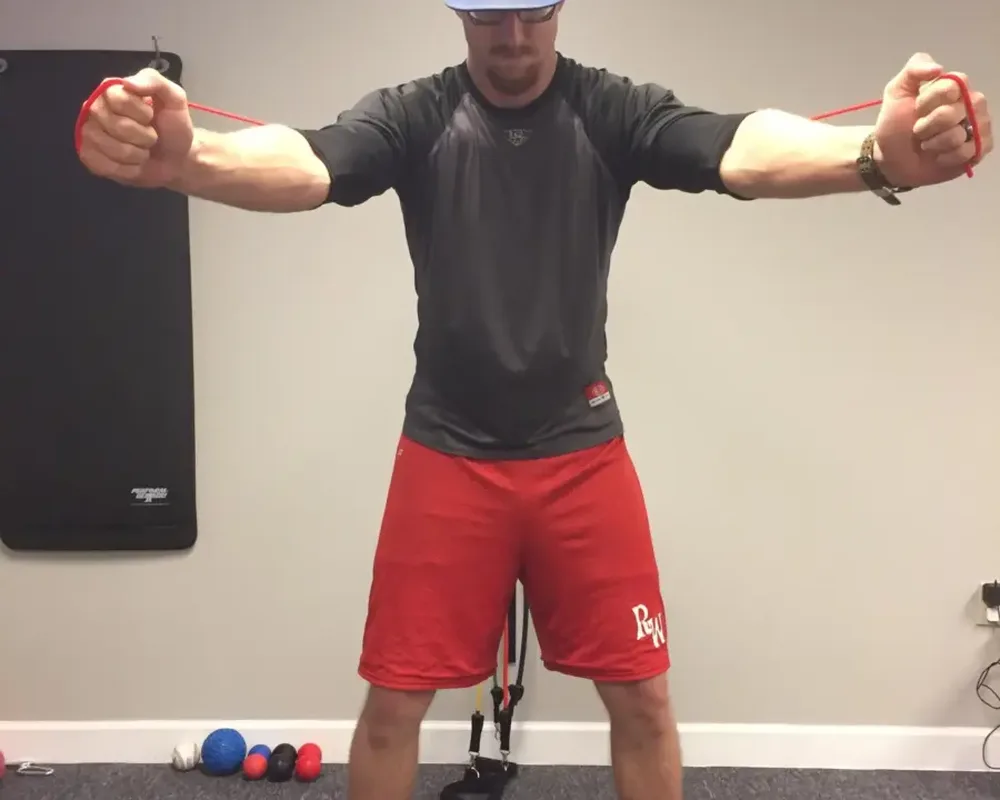
What is PRI therapy in Greer?
PRI stands for Postural Restoration Institute, a framework built on a fact most evaluations overlook: your body isn’t symmetrical to start with. Your diaphragm, your ribcage, even the shape of your lungs are lopsided by design, and most people compensate for that in the same handful of predictable patterns, patterns that show up as chronic tension on one side, breathing that never quite feels full, or pain that keeps recurring in a spot that’s never actually the cause.
PRI work layers onto the same four phases everyone here moves through, Pain, Prime, Perform, and Prevent. Early on, it’s breathing retraining and repositioning that calms an overworked pattern down. Later, it’s building strength and control into the side your body has been avoiding, so the correction holds under real load instead of only in a quiet treatment room.
Every session is with the same Doctor of Physical Therapy trained in PRI principles, and the plan still has a named endpoint. This isn’t a standalone system that replaces your evaluation, it’s a more precise lens applied to the same cause-first plan.
Calm it down.
Hands-on treatment begins at the first visit. You leave understanding what’s actually going on, and you feel a difference early.
Restore what’s stuck.
Targeted mobility work for the joints and tissue actually holding you back, dosed to your body, not a printed sheet.
Build strength you trust.
Progressive load against standards you have to clear before moving on. Confidence, here, is a training effect.
Make it stay fixed.
Testing before you’re cleared, then a keep-it-gone program sized to your real week. Then we graduate you.
What conditions does PRI therapy treat?
PRI tends to get called in when pain or tension has resisted a standard approach, usually because an asymmetry pattern was driving it the whole time. A sample of what it commonly addresses:
Chronic pain ⟶
The pain that’s stuck around long after a normal timeline for healing should have closed the case.
02Back pain & sciatica ⟶
The one-sided tightness across the low back that stretching the same way every time never quite resolves.
03Hip & knee pain ⟶
The hip that always feels more rotated or stuck on one side, no matter how much you stretch it.
Asymmetry that goes unaddressed doesn’t stay quiet. Your body keeps compensating around it, and the site of the compensation, not the pattern itself, is usually where the pain eventually shows up.
What does a PRI therapy session look like?
Your evaluation includes a specific look at how you breathe and how symmetrically your ribcage, pelvis, and diaphragm are working, testing that a standard exam usually skips. That’s layered onto the same hands-on evaluation everyone gets, not a separate appointment.
Treatment sessions combine positional breathing exercises, often lying down in specific positions that let you finally access the side your body has been avoiding, with manual therapy and progressive strengthening once that access is real. It looks quieter than a typical strength session, and the change it produces is often immediate and easy to feel.
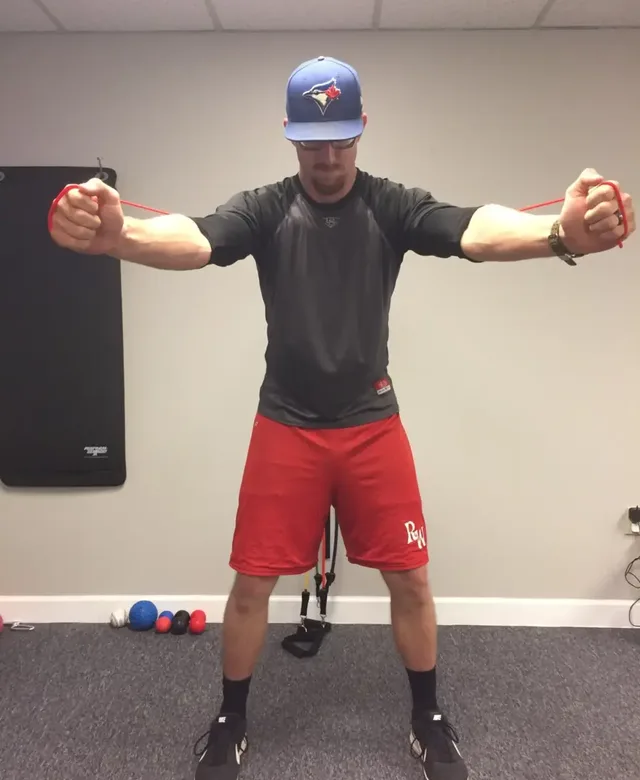
Who this is for, and who it isn’t.
PRI therapy tends to fit people whose pain or tightness is consistently one-sided, who’ve been through a round of standard physical therapy without much change, or who notice their breathing never feels quite full or even between sides. Runners with a persistent lean, golfers with a stuck rotation, and desk workers with chronic one-sided neck or hip tension all turn up here often.
If you’ve done the general exercises, stretched the tight side a hundred times, and it keeps coming back the same way, that repetition is usually the clue that a deeper asymmetry pattern, not a weak muscle, is running the show.
It’s not the right first stop for an acute injury that hasn’t been evaluated yet, or symptoms that are clearly one structure failing, a torn ligament, a fracture, rather than a movement pattern. Start with a standard evaluation in those cases; PRI work often joins the plan once the acute piece is addressed.
Good fit
- Pain or tightness that’s consistently on one side
- Breathing that never feels quite full or even between sides
- Already tried standard physical therapy with limited change
- A recurring pattern, not a single acute injury
Not the right first stop
- An acute injury that hasn’t been evaluated yet
- A clear single-structure failure, like a torn ligament or a fracture
Manual therapy ⟶
Hands-on work that helps the newly accessible side actually move once it’s freed up.
02Therapeutic exercise ⟶
Strength work that makes a corrected pattern hold under real load, not just on the mat.
The correction only sticks once it’s trained into how you actually move.
“I use a lot of your feedback to help my confidence. If I don’t see that you’re freaking out about something I’m freaking out about, I feel a lot better about it.”Grace Alexander · Professional triathlete, triathlon coach
Questions, answered plainly.
PRI stands for Postural Restoration Institute, a framework built around a simple observation: the human body isn’t symmetrical to begin with, and most of us compensate for that asymmetry in predictable, treatable patterns. PRI addresses chronic pain, one-sided tightness, and breathing mechanics that a standard evaluation often reads as several unrelated problems instead of one connected pattern.
The diaphragm isn’t only a breathing muscle, it’s directly connected to your pelvis, ribcage, and spine, and how you breathe shapes how those structures sit and move all day, every day. A restricted breathing pattern on one side tends to lock the ribcage and pelvis into a rotated position, which is often the quiet driver behind pain that shows up somewhere else entirely.
A PRI evaluation adds a specific look at breathing patterns and side-to-side asymmetry, testing how your ribcage, pelvis, and diaphragm are positioned and whether you can actually access both sides of your body evenly. It’s layered onto the same cause-first evaluation everyone gets here, not a separate visit.
Some patients notice a shift in how they breathe or move within the first couple of visits, since the initial repositioning work can produce an immediate, felt change. Correcting a longstanding pattern that’s been reinforced for years takes longer, and your evaluation gives you a specific estimate based on what it finds, not a generic number.
Start with the pattern behind the pain.
Put it in writing.
Five short questions. A real person calls you back, usually within two business hours, with times that fit your week.
The people who end up filling this out are rarely in the worst pain of their life. They’re just done working around it, done picking the errand that doesn’t require the stairs. If that’s the stage you’re at, this is the part where you stop researching and start.
Consider it filed.
A real person will call you back, usually within two business hours, with appointment times that fit your week. Keep your phone nearby.
Can’t wait? Call (864) 263-7390 ⟶Easy to find. Easy to park.
In the neighborhood, with parking by the door. Come see the place before you commit, if you like.
The clinic · Zone Physical Therapy
Get Directions ⟶Opens in Google Maps