

Greer, SC · Services
Orthopedic therapy in Greer.
Care for the muscle, joint, and bone pain that’s started limiting your sport or your day: a cause-first evaluation and a plan with an endpoint, from a Doctor of Physical Therapy.
What is orthopedic therapy in Greer?
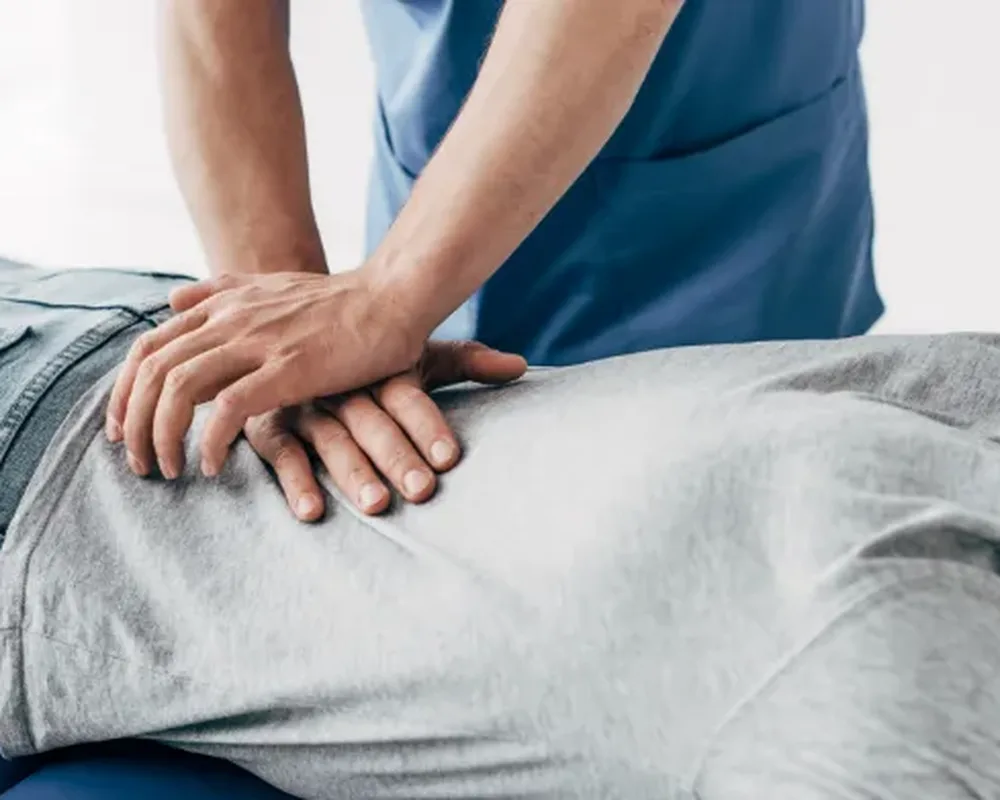
Orthopedic therapy is care built around your musculoskeletal system: the muscles, joints, ligaments, tendons, and bones that let you move. It starts with a cause-first evaluation, a full hour testing movement, strength, and the joints above and below the one that’s loud, because pain in one spot is often a symptom of something happening somewhere else.
From there, every visit is one-on-one with the same Doctor of Physical Therapy, hands-on, for the full hour. Care moves through four named phases, Pain, Prime, Perform, and Prevent, in that order, whether you’re working back from a joint that’s worn down, a muscle that tore, or an activity that’s simply outgrown its structure. You always know which phase you’re in and what earns you the next.
And the plan has an endpoint, named out loud at your evaluation, whether that endpoint is a pain-free daily routine or a full return to the sport that brought you in.
Calm it down.
Hands-on treatment begins at the first visit. You leave understanding what’s actually going on, and you feel a difference early.
Restore what’s stuck.
Targeted mobility work for the joints and tissue actually holding you back, dosed to your body, not a printed sheet.
Build strength you trust.
Progressive load against standards you have to clear before moving on. Confidence, here, is a training effect.
Make it stay fixed.
Testing before you’re cleared, then a keep-it-gone program sized to your real week. Then we graduate you.
What conditions does orthopedic therapy treat?
Orthopedic therapy covers most of what limits movement and daily activity. A sample of what it commonly addresses:
Hip & knee pain ⟶
The stairs you now take one at a time, and the ache that shows up after sitting too long.
02Shoulder pain ⟶
The overhead reach and the top shelf you’ve quietly started avoiding.
03Arthritis ⟶
The joint that’s worn down, and the muscle support around it that can still be built back up.
Orthopedic pain that’s ignored rarely stays put. It changes how you sit, how you lift, how you sleep, and the compensation it forces tends to create a second problem while the first one goes untreated.
What does an orthopedic therapy session look like?
The first visit is the evaluation: a conversation about when it started and what it’s costing you, then hands-on testing of the joint itself and the ones around it, before any treatment begins. You leave with a plan, not a pamphlet, and hands-on treatment has already started.
Every visit after runs the same way: a check-in, hands-on manual therapy where the evaluation pointed, then movement or loading work dosed to where you are in the phase. Your doctor stays in the room the whole time, and before you leave, you know what today’s work was for and what visit two is building toward.
Who this is for, and who it isn’t.
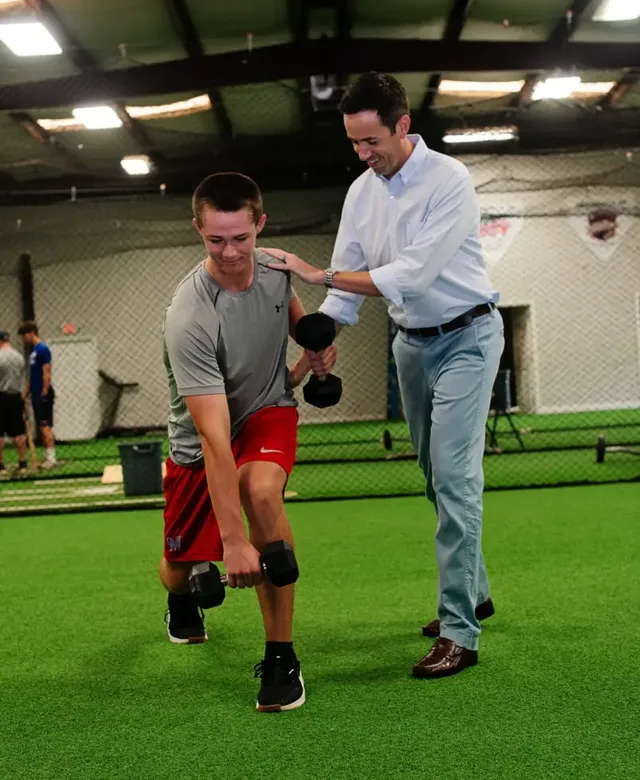
Orthopedic therapy tends to fit people whose muscles, joints, or bones are limiting what they can actually do, whether that’s an athlete who can’t train through a nagging joint, a weekend golfer who’s lost distance to a stiff hip, or someone whose knee makes stairs a daily negotiation. You don’t need a referral or a diagnosis already in hand. That’s what the evaluation is for.
The people who get the most out of this room are usually the ones who want a real reason for the limitation, not just something to work around it. If you’re tired of managing around a joint instead of fixing what’s wrong with it, this is built for you.
It’s not the right first stop for a medical emergency (a fracture that needs to be set, sudden numbness or weakness) or a suspected infection in a joint. In those cases, go to urgent care or your physician first, then come see us for the rehabilitation that follows.
Good fit
- An athlete training through a nagging joint or muscle limitation
- Daily activity that’s become a negotiation because of a joint or muscle problem
- Arthritis or wear-and-tear pain you want a real plan around, not just management
- No referral required, and no need to already have a diagnosis
Not the right first stop
- A medical emergency: a fracture that needs to be set, sudden numbness or weakness
- A suspected infection in a joint
Manual therapy ⟶
Hands-on joint and soft tissue work that speeds up what the evaluation found.
02Therapeutic exercise ⟶
The progressive loading that turns a joint you’re protecting into one you trust again.
They’re woven into the same visit, not booked as separate appointments.
“Christina’s knowledge and expertise got me on the trails again! I highly recommend Zone PT.”Barbara Kaylor · Zone PT patient
Questions, answered plainly.
Anything involving your muscles, joints, ligaments, tendons, or bones. That covers a sprained ankle, a stiff knee, arthritis that’s worn down a joint, and everything in between. If it’s limiting how your body moves rather than how your nerves or organs are functioning, it’s almost certainly orthopedic.
No. Your cause-first evaluation tests movement, strength, and joint mechanics directly, which is often more useful for building a plan than an X-ray or MRI alone. If your evaluation turns up something that genuinely warrants imaging, we’ll tell you and help you get it, but most orthopedic care starts and progresses without it.
Yes, in most cases. Arthritis doesn’t improve on its own, but the muscles supporting an arthritic joint respond well to the right loading, and a lot of the daily limitation people attribute to the joint itself is actually the surrounding muscle giving up first. Strengthening that support usually buys back real function, even when the joint itself isn’t going to change.
It depends on the cause and how it responds, not a preset timeline. Your evaluation gives you a specific estimate, and the Perform and Prevent phases include the actual load and movement testing that has to clear before you’re cleared back to your sport, not just a calendar date.
Start with a plan built around the actual joint.
Put it in writing.
Five short questions. A real person calls you back, usually within two business hours, with times that fit your week.
The people who end up filling this out are rarely in the worst pain of their life. They’re just done working around it, done picking the errand that doesn’t require the stairs. If that’s the stage you’re at, this is the part where you stop researching and start.
Consider it filed.
A real person will call you back, usually within two business hours, with appointment times that fit your week. Keep your phone nearby.
Can’t wait? Call (864) 263-7390 ⟶Easy to find. Easy to park.
In the neighborhood, with parking by the door. Come see the place before you commit, if you like.
The clinic · Zone Physical Therapy
Get Directions ⟶Opens in Google Maps