

Greer, SC · What we treat
TMJ/TMD in Greer.
A jaw that clicks every time you yawn, a headache at your temples most mornings, or a jaw that locks for a second before it releases: a cause-first evaluation looks at the joint and the neck together, then a plan with an endpoint gets you eating, talking, and waking up without that tension first.
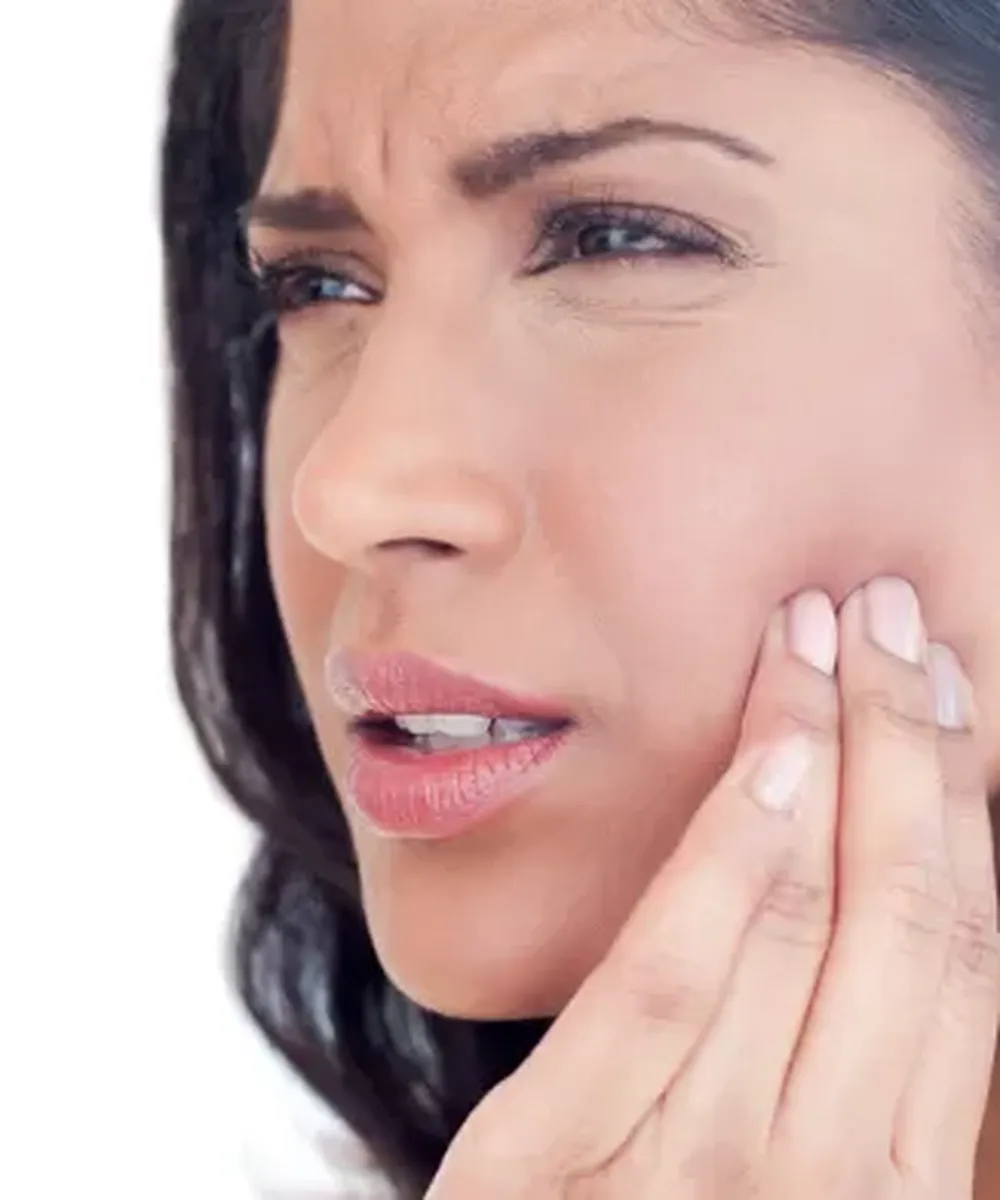
You’ve probably said one of these.
Nobody walks in describing a disc displacement they haven’t had assessed. They describe days like these. Tap one that sounds like your week.
-
UsuallyA joint mechanics issue in the temporomandibular joint, often related to how the disc inside the joint moves during opening.
See how manual therapy addresses joint mechanics ⟶ -
OftenA tension-type headache referred from overworked jaw muscles, frequently tied to nighttime clenching or grinding.
See how the neck-jaw connection factors in ⟶ -
UsuallyIntermittent locking related to joint or disc mechanics, common and typically responsive to manual therapy and motor control retraining.
See how the plan restores full opening ⟶
- “Chewing gum is off the table now, my jaw gets tired and sore too fast.”
- “I catch myself clenching during meetings and don’t even notice until my jaw aches after.”
- “My night guard helps a little, but the daytime pain never went away.”
If two or three of those sound like your week, you’re not imagining a connection between your jaw and your neck. You’re describing a pattern we see often, and one an evaluation is built to explain.
Why does TMJ/TMD happen?
There’s rarely one single cause, and it’s almost never just the jaw. What we usually find, alone or in combination:
- Joint disc displacement. The disc inside the temporomandibular joint moves out of its normal position during opening, producing clicking, catching, or locking.
- Muscle overactivity and clenching. Daytime clenching or nighttime grinding, often stress-related, that overworks the jaw muscles well beyond normal chewing demand.
- The neck-jaw connection. Upper cervical joint and muscle dysfunction commonly refers pain into the jaw and temples, and vice versa, since the two share nerve pathways and muscle attachments.
- Forward head posture. Hours of desk work or phone use shift how the jaw muscles have to work to keep the mouth in a resting position.
- Previous injury or dental changes. A prior jaw injury or a change in bite from dental work that shifted how the joint and muscles share load.
None of these are things a night guard alone reliably resolves, and most don’t require imaging to start treating. That’s what the evaluation sorts out.
How do we treat TMJ/TMD in Greer?
Treatment starts with a cause-first evaluation of jaw opening, joint mechanics, and neck mobility together, since a jaw that clicks and hurts doesn’t always fail at the jaw itself. From there, care moves through four named phases.
The plan’s endpoint is named at your evaluation and reviewed with you every phase, because the goal is a jaw you don’t think about, not an indefinite string of appointments.
Calm it down.
Hands-on manual therapy to the jaw and neck to settle inflamed joint tissue and overworked muscles, starting the first visit.
Restore full opening.
Joint mobilization and neck mobility work to restore normal, pain-free jaw opening without catching or deviation.
Retrain coordination.
Motor control work so the jaw opens and closes with even, coordinated muscle activity instead of compensating around the irritated side.
Make it stay fixed.
A home program and clenching-awareness coaching, plus posture strategies for desk work, to keep the same pattern from reloading the joint.
What does getting better look like?
People who end up booking an evaluation for TMJ are rarely the ones who noticed it once and got it checked right away. More often, it’s a slower story: a night guard from the dentist that helped some but not fully, months of quietly avoiding chewy foods, headaches blamed on stress or screens without ever connecting them to the jaw. If that’s closer to your version, you’re the typical patient here, not someone who overlooked something obvious.
Progress tends to show up in ordinary places first: yawning without the click, a morning without that temple headache, a meal you don’t have to eat carefully on one side. Left unaddressed, the muscle guarding and joint irritation rarely resolve on their own, and clenching habits especially tend to persist and even worsen under stress rather than fade with time.
An evaluation turns “my jaw just does this now” into a plan with a specific estimate, reviewed with you at every phase.
Which services treat TMJ/TMD?
Physical Therapy
The foundation of treatment: the cause-first evaluation and the four-phase plan that runs the whole recovery.
02Manual Therapy
Hands-on joint mobilization for the jaw and upper neck, the two areas most involved in TMJ dysfunction.
03Dry Needling
Targets chronically overworked jaw and neck muscles when manual therapy alone isn’t fully releasing the tension.
04Myofascial Release
Addresses fascial restriction around the jaw, temples, and neck that can keep tension in a self-reinforcing loop.
“Now I am on to riding my bike and workouts in the gym with the program from Zone PT. Thank you very much Dr. Scott!”M. I. · Zone PT patient
Questions, answered plainly.
The things people ask on the phone about their jaw, written down.
For most jaw joint dysfunction, physical therapy is an appropriate first step and often resolves symptoms on its own, working on joint mechanics, muscle tension, and neck involvement. Some cases, like significant structural issues or a bite that needs correcting, do need a dentist or oral surgeon’s input, and we’ll say so and coordinate with them directly rather than treating something outside our scope.
The muscles and nerves around the upper neck and jaw share close anatomical connections, so tension or restriction in one area commonly refers pain into the other. Forward head posture, common with desk work and phone use, also changes how the jaw muscles have to work, which is why treating the neck alongside the jaw often gets better results than treating the jaw alone.
Clicking alone, without pain or locking, doesn’t always need to be eliminated and isn’t necessarily a sign of damage. When clicking comes with pain, locking, or a limited opening, treatment aimed at joint mechanics and surrounding muscle coordination often reduces or resolves it, though the timeline depends on how long it’s been going on.
Notice and gently break the habit of clenching during the day, avoid extra-wide bites like giant sandwiches while it’s irritated, and apply warmth to tense jaw muscles. Beyond that, home habits alone rarely resolve significant TMJ dysfunction, since the joint mechanics and neck involvement usually need hands-on treatment to actually change. Your evaluation will tell you what’s driving your specific pattern.
Start with a cause-first evaluation for your jaw.
Put it in writing.
Five short questions. A real person calls you back, usually within two business hours, with times that fit your week.
The people who end up filling this out are rarely in the worst pain of their life. They’re just done working around it, done picking the errand that doesn’t require the stairs. If that’s the stage you’re at, this is the part where you stop researching and start.
Consider it filed.
A real person will call you back, usually within two business hours, with appointment times that fit your week. Keep your phone nearby.
Can’t wait? Call (864) 263-7390 ⟶Easy to find. Easy to park.
In the neighborhood, with parking by the door. Come see the place before you commit, if you like.
The clinic · Zone Physical Therapy
Get Directions ⟶Opens in Google Maps