

Greer, SC · Services
Soft tissue mobilization in Greer.
Targeted, hands-on work for the muscle and fascia restrictions that stretching and foam rolling haven’t touched, found by a cause-first evaluation and released inside an actual plan.
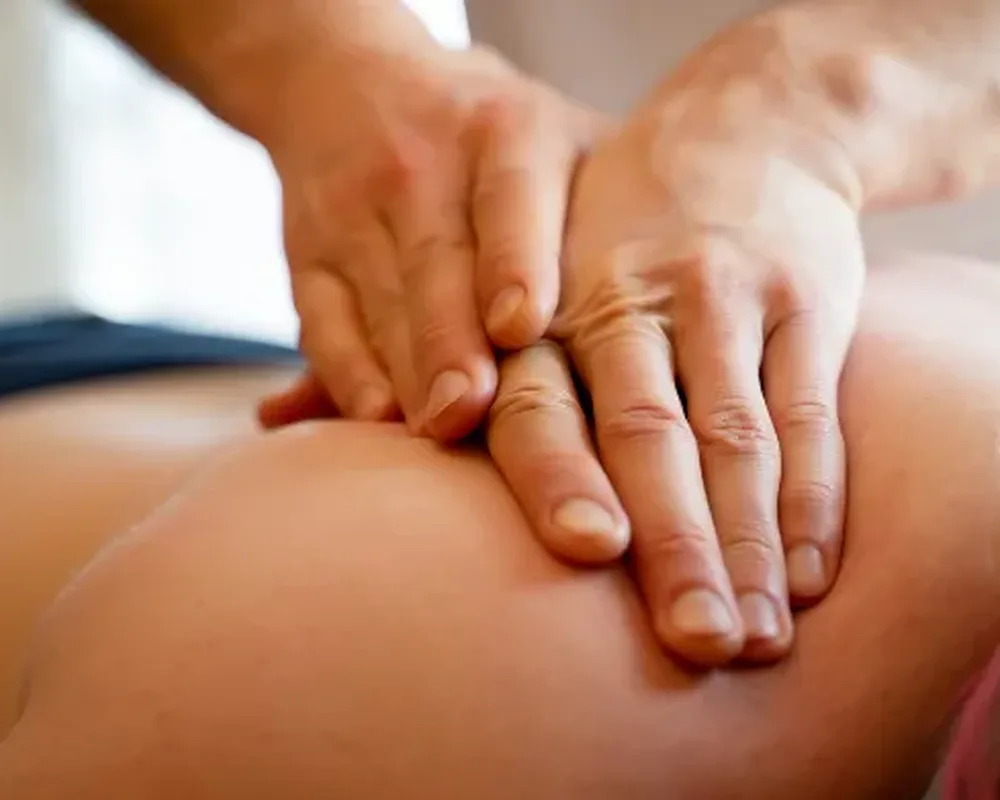
What is soft tissue mobilization in Greer?
Soft tissue mobilization is hands-on work aimed at muscle, fascia, and the joints they cross when they’ve tightened into a restriction that’s actually limiting you. It starts with a cause-first evaluation that finds where the restriction lives and why it’s there, not a generalized rubdown handed to everyone who walks in.
From there, every visit is one-on-one with a Doctor of Physical Therapy, hands-on, for the full hour. Care moves through four named phases, Pain, Prime, Perform, and Prevent, in that order: releasing the acute tightness, restoring the range it was robbing you of, loading the tissue so the new range actually holds, and building the habits that keep it from re-tightening.
And the plan has an endpoint, named at your evaluation, because the goal is lasting range, not a session you keep rebooking indefinitely.
Calm it down.
Hands-on treatment begins at the first visit. You leave understanding what’s actually going on, and you feel a difference early.
Restore what’s stuck.
Targeted mobility work for the joints and tissue actually holding you back, dosed to your body, not a printed sheet.
Build strength you trust.
Progressive load against standards you have to clear before moving on. Confidence, here, is a training effect.
Make it stay fixed.
Testing before you’re cleared, then a keep-it-gone program sized to your real week. Then we graduate you.
What conditions does soft tissue mobilization treat?
Soft tissue mobilization tends to get called in when a restriction has quietly been limiting movement for longer than anyone realized. A sample of what it commonly addresses:
Neck pain ⟶
The corded muscle along one side of the neck that’s turned checking your blind spot into a wince.
02Back pain & sciatica ⟶
The deep paraspinal tightness sitting on top of, and often disguising, the actual reason your back hurts.
03Chronic pain ⟶
The restriction that’s been there so long it feels normal, until it’s finally released and you notice how much range you’d quietly given up.
A restriction left alone rarely just sits there. The body routes movement around it, and that workaround usually shows up somewhere else, a hip that overworks, a shoulder that compensates, weeks after the original tightness started.
What does a soft tissue mobilization session look like?
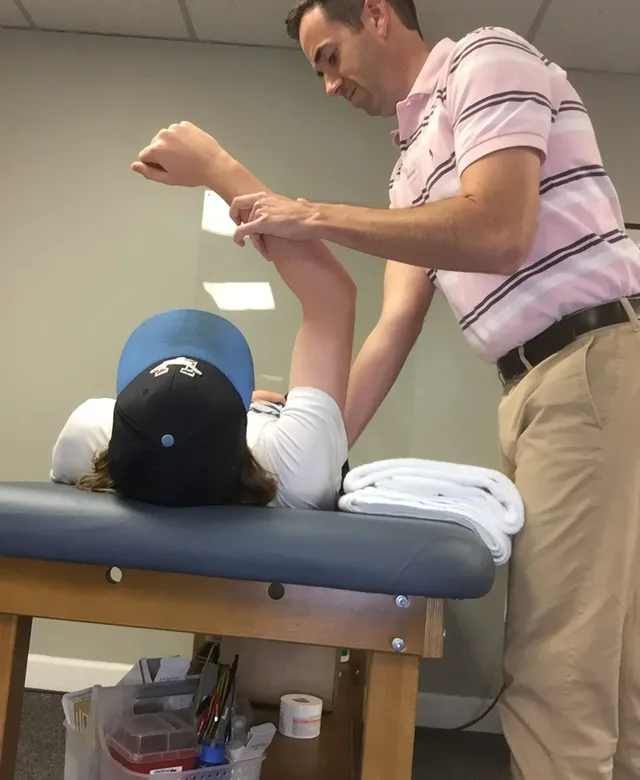
The evaluation finds the restriction by feel and by testing your movement against what a healthy joint should be able to do, then treatment starts the same hour. You leave knowing exactly which tissue was involved and why it mattered.
Every visit after runs the same way: hands-on work directly on the restricted tissue, followed by movement that reinforces the new range so it actually holds between visits. Your doctor stays with you the whole hour and tells you what today’s work is building toward.
Who this is for, and who it isn’t.
Soft tissue mobilization tends to fit anyone whose training or daily movement is limited by chronic tightness, especially if stretching, rolling, and rest haven’t produced a lasting change. It’s often the piece that unlocks the rest of a plan when a stiff joint or a corded muscle keeps blocking progress elsewhere.
The people who ask for this by name are usually the same type: they’ve tried the tools at home, they know exactly where it’s tight, and they want someone who can actually reach the restriction and address it directly. If that’s you, this is worth raising at your evaluation.
It’s not the right first stop for an unhealed fracture, an acute injury where tissue work is contraindicated, or pain that hasn’t yet been diagnosed and might need imaging first. In those cases, get evaluated medically first, then come see us for the mobility work that follows.
Good fit
- Chronic tightness limiting training or daily movement
- Stretching, rolling, and rest that haven’t produced a lasting change
- A specific restriction blocking progress elsewhere in a plan
- Willing to raise it at your evaluation if you already know where it’s tight
Not the right first stop
- An unhealed fracture or acute injury where tissue work is contraindicated
- Undiagnosed pain that may need imaging first
Manual therapy ⟶
Joint mobilization for the stiffness soft tissue work alone can’t reach.
02Myofascial release ⟶
A slower, sustained-pressure technique for fascia that’s adhered across a wider area.
It’s a tool inside the plan, never the whole plan.
“It was getting to the point I was not going to be functional too much longer without surgery, but I wanted to try everything before going that route.”Katherine Pischke · Zone PT patient
Questions, answered plainly.
It varies by area and how restricted the tissue is, but most patients describe firm, sustained pressure along a specific muscle or fascia line, sometimes uncomfortable in the moment, followed by a looseness that lasts well past the session. It’s rarely painful in a sharp way; it’s more of a deep, working pressure.
No, though the hands-on feel can be similar. Massage is generally aimed at relaxation across a broad area. Soft tissue mobilization is targeted at a specific restriction found during your evaluation, aimed at restoring a measurable range of motion or function, and it’s performed by a Doctor of Physical Therapy as part of a plan, not a standalone relaxation service.
A foam roller or massage gun applies generalized pressure wherever you point it. Soft tissue mobilization targets the specific restriction your evaluation found, at a depth and angle a device can’t replicate, and it’s paired with the movement or strength work that keeps the tissue from tightening right back up.
It depends on how long the restriction has been building and how it responds. A recent, isolated tightness might loosen in one or two sessions inside a broader plan; a longstanding restriction tied to years of compensation usually needs a few rounds through the Pain and Prime phases before it holds. Your evaluation gives you a specific estimate.
Start with the evaluation that finds the actual restriction.
Put it in writing.
Five short questions. A real person calls you back, usually within two business hours, with times that fit your week.
The people who end up filling this out are rarely in the worst pain of their life. They’re just done working around it, done picking the errand that doesn’t require the stairs. If that’s the stage you’re at, this is the part where you stop researching and start.
Consider it filed.
A real person will call you back, usually within two business hours, with appointment times that fit your week. Keep your phone nearby.
Can’t wait? Call (864) 263-7390 ⟶Easy to find. Easy to park.
In the neighborhood, with parking by the door. Come see the place before you commit, if you like.
The clinic · Zone Physical Therapy
Get Directions ⟶Opens in Google Maps