Greer, SC · Services
IASTM and Astym therapy in Greer.
Instrument-assisted work that finds restricted, fibrotic tissue hands alone can miss, and breaks it down as part of a cause-first plan for stiffness that’s been sitting there since an old injury.
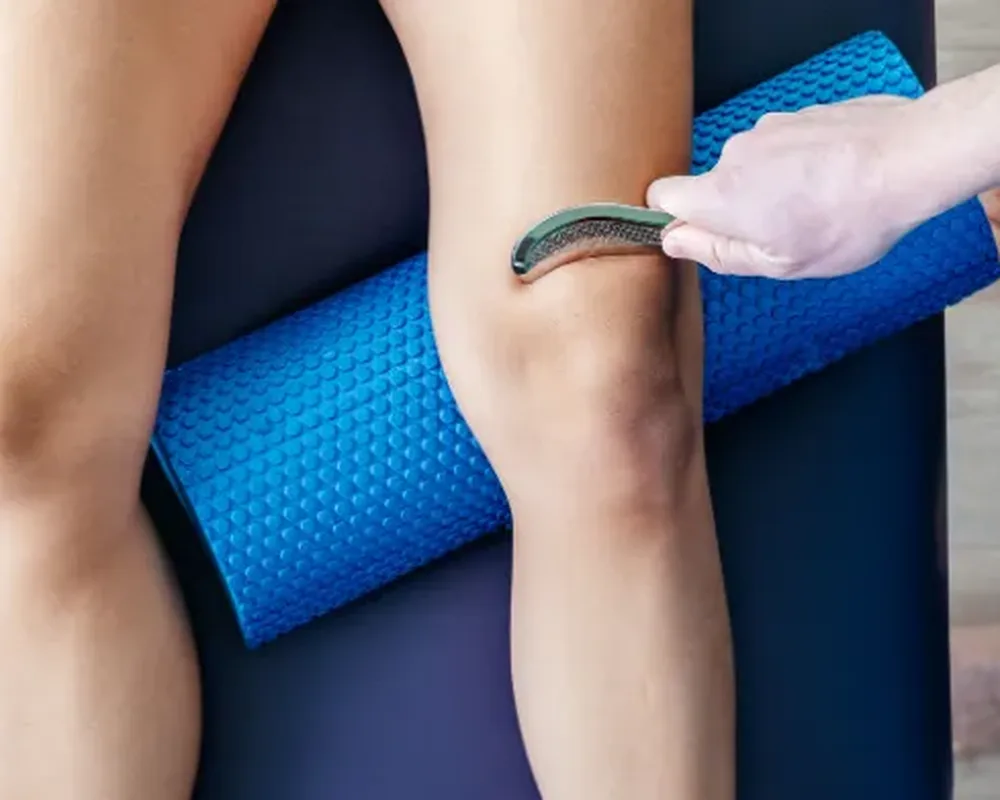
What is IASTM and Astym in Greer?
Instrument-assisted soft tissue mobilization, IASTM, uses curved, beveled tools instead of hands to glide across the skin over muscle, tendon, and fascia. The instrument’s edge picks up on restricted, fibrotic tissue, the dense, rope-like scarring left behind by an old injury, a surgery, or years of repetitive strain, in a way fingers alone often can’t feel clearly. Astym is a specific, branded protocol within that same instrument-assisted category, aimed at the same goal through a related technique.
Once that restricted tissue is located, the instrument works it directly, stimulating a localized healing response and breaking down the excess scarring that’s been quietly limiting your motion, sometimes for years without you ever naming it as the cause.
It’s performed by a Doctor of Physical Therapy inside a full evaluation and plan, and it tends to earn its place in the Prime phase, once initial pain has settled and restoring lost mobility becomes the priority, ahead of the strength work in Perform.
Calm it down.
Hands-on treatment begins at the first visit. You leave understanding what’s actually going on, and you feel a difference early.
Restore what’s stuck.
Targeted mobility work for the joints and tissue actually holding you back, dosed to your body, not a printed sheet.
Build strength you trust.
Progressive load against standards you have to clear before moving on. Confidence, here, is a training effect.
Make it stay fixed.
Testing before you’re cleared, then a keep-it-gone program sized to your real week. Then we graduate you.
What conditions does IASTM and Astym treat?
IASTM and Astym tend to get called in when restricted, scarred, or chronically stiff tissue is the thing standing in the way. A sample of what it commonly supports:
Chronic pain ⟶
The stiffness that’s outlasted the original injury by years.
02Shoulder pain ⟶
The overhead reach that never quite came back after an old rotator cuff strain.
03Back pain & sciatica ⟶
The dense band along the spine that manual pressure alone can’t seem to soften.
Scar tissue and fibrotic buildup don’t resolve on their own with time. Left alone, they tend to restrict movement further as the body works around them, which is usually how an old injury quietly turns into a permanent limitation.
What does an IASTM or Astym session look like?
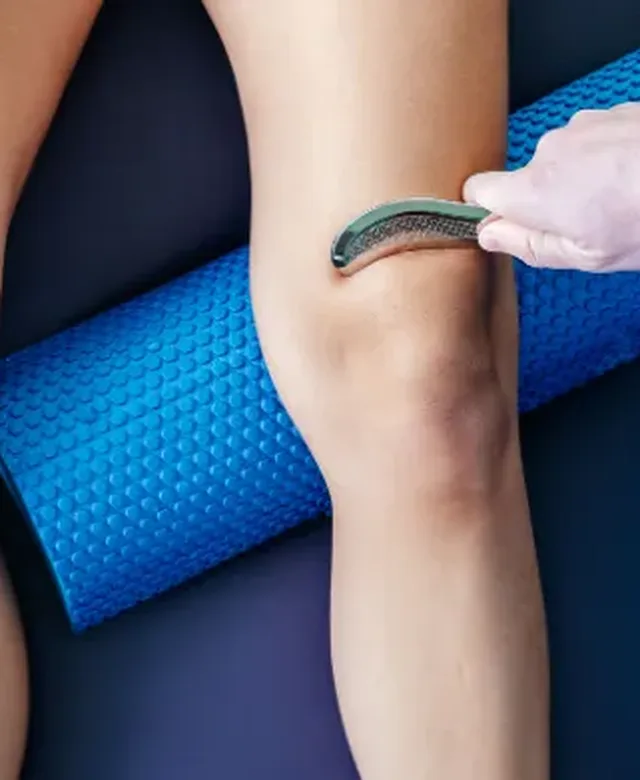
Your Doctor of Physical Therapy uses the instrument’s edge to scan the treatment area first, feeling for the dense, gritty texture that marks restricted tissue, then works that specific area with repeated, controlled strokes. You’ll feel firm pressure and, over genuinely restricted spots, a distinct scraping sensation that eases as the tissue responds.
Sessions run inside a regular visit, typically followed by mobility or stretching work while the tissue is primed to move, and mild soreness or redness afterward is normal and usually settles within a day. Your doctor tracks the tissue’s response visit to visit and adjusts pressure and area accordingly.
Who this is for, and who it isn’t.
IASTM and Astym tend to fit chronic tendon or muscle tightness that hasn’t responded to stretching alone, old scar tissue from a surgery or injury that’s still restricting movement years later, or the general stiffening that shows up with age and starts limiting activities you used to do without thinking.
The patients who benefit most are usually the same type: something that’s been tight or stuck for a long time, that’s survived rest, stretching, and time alone. If that’s the pattern you’re living with, it’s worth raising at your evaluation.
It’s not appropriate over an open wound or active skin infection, near an active blood clot, over an area of unhealed fracture, or for a patient on blood thinners with a tendency toward easy, uncontrolled bruising. That screening happens at your evaluation, before any instrument touches your skin.
Good fit
- Chronic tendon or muscle tightness that hasn’t responded to stretching alone
- Old scar tissue from a surgery or injury still restricting movement years later
- General stiffening with age that’s started limiting activity
Not the right fit
- An open wound or active skin infection
- An active blood clot near the treatment area
- An unhealed fracture
- Blood thinners with a tendency toward uncontrolled bruising (screened at evaluation)
Manual Therapy ⟶
Hands-on work that follows once the instrument has softened the restriction.
02Active Release Technique ⟶
For the restriction that needs movement added while it’s being worked, not just pressure.
It’s a tool inside the plan, never the whole plan.
“The staff is professional, knowledgeable, and genuinely invested in their patients’ well-being. I highly recommend them to anyone seeking relief.”Bryan Baker · Zone PT patient
Questions, answered plainly.
Sometimes, especially in the first session or two over a particularly restricted area. Mild redness is common and usually fades within a day; occasional light bruising can last a few days longer. We adjust pressure to what your tissue can tolerate, and we tell you what to expect before we start.
IASTM and Astym use curved, beveled instruments rather than hands, which lets your Doctor of Physical Therapy feel and treat restricted tissue with more precision than fingers alone can manage. It’s performed as part of a diagnostic evaluation aimed at a specific structure, not a general relaxation treatment.
Old, established scar tissue usually takes several sessions to change meaningfully, often spread across a few weeks with mobility work in between. Your Doctor of Physical Therapy will give you a specific estimate at your evaluation once they know what they’re working with.
Most patients describe a firm, scraping pressure over the restricted area rather than sharp pain, more intense in spots that are genuinely fibrotic and milder elsewhere. We start conservatively and adjust based on your feedback in the room, not a fixed pressure setting.
Start with the evaluation that finds the restriction.
Put it in writing.
Five short questions. A real person calls you back, usually within two business hours, with times that fit your week.
The people who end up filling this out are rarely in the worst pain of their life. They’re just done working around it, done picking the errand that doesn’t require the stairs. If that’s the stage you’re at, this is the part where you stop researching and start.
Consider it filed.
A real person will call you back, usually within two business hours, with appointment times that fit your week. Keep your phone nearby.
Can’t wait? Call (864) 263-7390 ⟶Easy to find. Easy to park.
In the neighborhood, with parking by the door. Come see the place before you commit, if you like.
The clinic · Zone Physical Therapy
Get Directions ⟶Opens in Google Maps