

Greer, SC · Services
Cupping in Greer.
Targeted suction work for the muscle tension that keeps returning in the same tight band, paired with the rest of a plan that addresses why it keeps coming back.
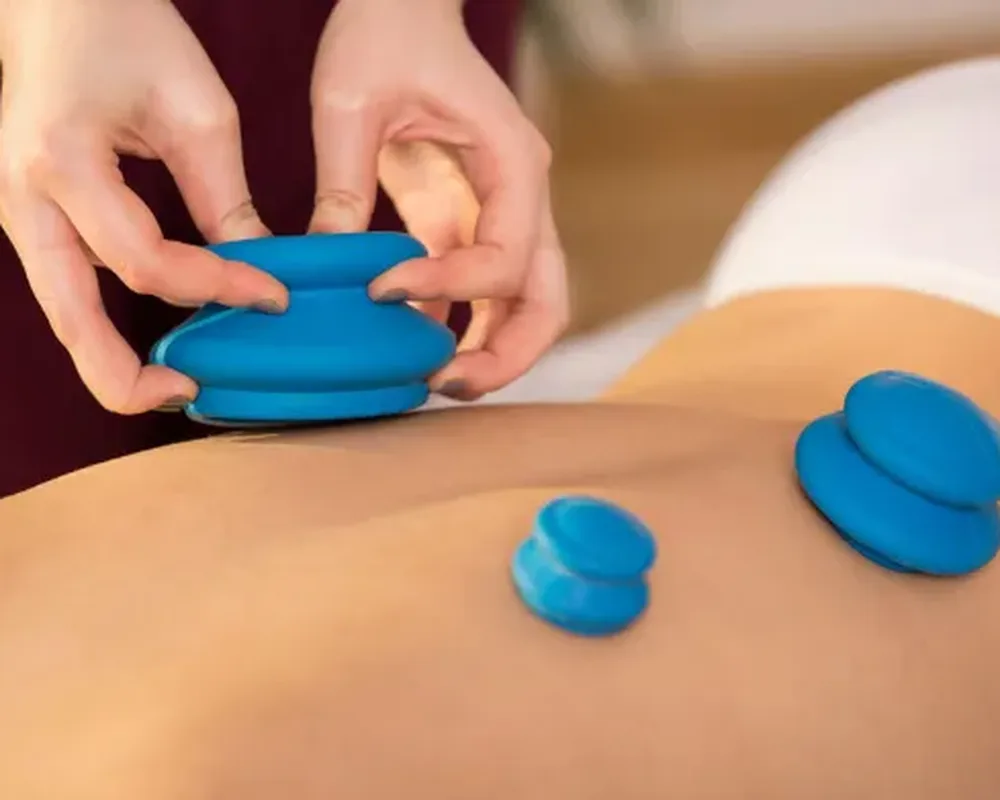
What is cupping in Greer?
Cupping uses suction, not pressure, to lift and separate the layers of skin, fascia, and muscle instead of compressing them. That lift draws blood flow to the area and creates space in tissue that’s been stuck together, which is often exactly what a deep, repeated muscle knot needs and a stretch alone can’t give it.
It’s never used as a stand-alone fix. Cupping addresses the tissue tension itself, then the rest of your visit, manual therapy and movement work, addresses the loading pattern or posture that let the tension build up in the first place.
Like every plan here, it’s folded into the four named phases, Pain, Prime, Perform, and Prevent, with an endpoint defined at your evaluation.
Lift the tension.
Cupping applied to the tight band itself, paired with manual therapy the same visit.
Address what caused it.
Mobility and postural work for the pattern that let the tissue tighten up in the first place.
Build the strength around it.
Progressive strengthening so the muscle isn’t compensating for something else nearby.
Keep it from tightening back up.
A maintenance plan sized to your real week, so the same band doesn’t just retighten.
What conditions does cupping treat?
Cupping is most useful wherever tissue tension has become part of a chronic pattern. A sample of what it commonly addresses:
Chronic pain ⟶
The pain that’s partly a tissue-mobility problem, not purely a nerve or joint one.
02Back pain & sciatica ⟶
The tight band along the low back that tightens right back up after every stretch.
03Neck pain ⟶
The knot at the base of the neck that shows up by the end of every workday.
Left alone, a tight band of muscle rarely stays isolated. It changes how the joints around it move, and the compensation tends to spread the longer the underlying tension goes unaddressed.
What does a cupping session look like?
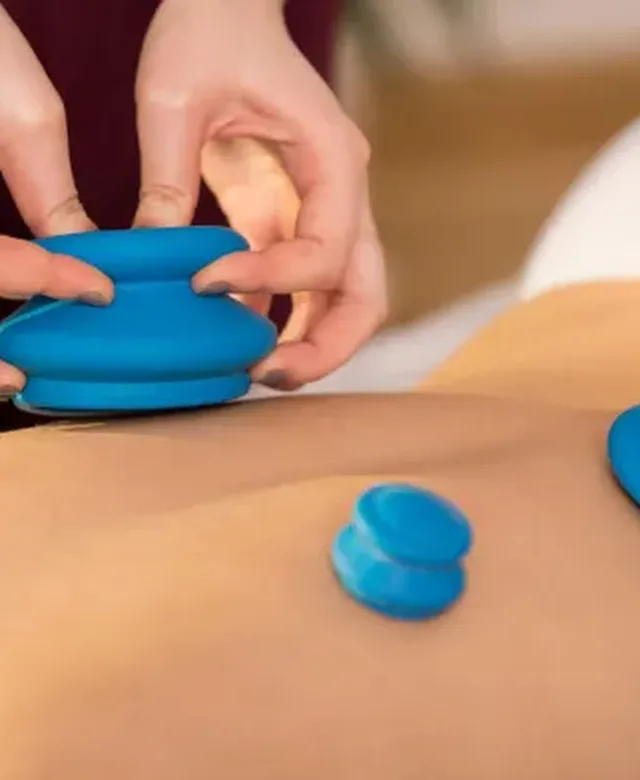
Cupping is applied directly to the tight, restricted tissue your evaluation identified, using suction cups placed and sometimes moved slowly across the area. Most patients describe the sensation as a deep, pulling pressure, uncomfortable at times but not sharp, and it’s always adjusted to what you can tolerate.
It's almost never the entire visit. Cupping typically runs fifteen to twenty minutes within a longer session that also includes hands-on manual therapy and movement work aimed at the cause behind the tension, not just the tension itself.
Who this is for, and who it isn’t.
This fits muscle tension that keeps coming back in the same tight bands, traps, upper back, calves, and chronic pain that has a real tissue-mobility component sitting alongside whatever else is going on. It also fits anyone who's tried stretching and foam rolling on their own without lasting change.
Cupping is a tool added to an existing plan, not a stand-alone fix, and it works best on people who understand that going in.
It’s not appropriate over broken or irritated skin, an active infection, or a bleeding disorder affecting the treatment area. And it’s not the right expectation if you’re hoping cupping alone resolves a structural or nerve-related cause; that needs the rest of the evaluation and plan alongside it.
Good fit
- Muscle tension that keeps returning in the same tight bands
- Chronic pain with a real tissue-mobility component
- Tried stretching and foam rolling alone without lasting change
- Wants a tool added to an existing plan, not a stand-alone fix
Not the right first stop
- Broken or irritated skin, active infection, or a bleeding disorder over the area
- Expecting cupping alone to resolve a structural or nerve-related cause
Manual therapy ⟶
For the joint stiffness that often sits right underneath the tight band cupping is treating.
02Myofascial release ⟶
For a broader, hands-on approach to fascial restriction alongside targeted suction work.
It’s a tool inside the plan, never the whole plan.
“The staff is professional, knowledgeable, and genuinely invested in their patients’ well-being. I highly recommend them to anyone seeking relief.”Bryan Baker · Zone PT patient
Questions, answered plainly.
It can leave temporary circular discoloration where the suction was applied, which usually fades within a few days to a week. It’s not painful in the way a bruise is; most patients describe the sensation during treatment as a deep pulling pressure, not sharp pain.
It’s almost always paired with the rest of your visit, hands-on manual therapy and movement work, rather than used by itself. Cupping’s job is to address surface and mid-layer tissue tension so the rest of the plan can work more effectively underneath it.
It’s most useful for muscle tension that keeps returning in the same tight bands, upper back, neck, calves, and for chronic pain that has a real tissue-mobility component. It’s an adjunct, not a stand-alone fix for a structural or nerve-related cause.
Many patients feel looser the same day, but lasting change usually needs it repeated across a few visits while the actual cause, often a posture or loading pattern, gets addressed at the same time.
Get the tension that won’t let go, actually addressed.
Put it in writing.
Five short questions. A real person calls you back, usually within two business hours, with times that fit your week.
The people who end up filling this out are rarely in the worst pain of their life. They’re just done working around it, done picking the errand that doesn’t require the stairs. If that’s the stage you’re at, this is the part where you stop researching and start.
Consider it filed.
A real person will call you back, usually within two business hours, with appointment times that fit your week. Keep your phone nearby.
Can’t wait? Call (864) 263-7390 ⟶Easy to find. Easy to park.
In the neighborhood, with parking by the door. Come see the place before you commit, if you like.
The clinic · Zone Physical Therapy
Get Directions ⟶Opens in Google Maps